◆이코노미스트가 글로벌 차세대 경제 리더, 청소년 기자단 영 저널리스트와 함께합니다. 영 저널리스트 기자단은 프리미엄 경제지 이코노미스트, 논술 전문 기관 Ni 에듀케이션과 함께 주요 시사 이슈를 팔로우업하고 직접 기획, 취재, 기사 작성 활동을 하며 사회적 문제를 고심하고 해결 방안을 제시하는 과정을 경험하게 됩니다. 이번 기사는 영 저널리스트 기자단이 현 사회현상에 대해 학생들 시선에서 ‘왜’라는 질문을 갖고 직접 취재해 작성한 기획기사입니다. 영 저널리스트 기자단의 기획기사는 영문과 국문, 두 형태로 게재합니다.
[Young journalist Choi Jion] If you look at Instagram stories posted by teenagers these days, it’s easy to find expressions like “oemojeongbyeong om” or “eoltaegi eotteoghae.” So what do these terms mean? Both are new slang frequently used by teens on the internet and social media. “oemojeongbyeong” is a combination of the word for “appearance” and jeongbyeong, a shortened slang term meaning “someone who is mentally obsessed.” Meanwhile, “eoltaegi” is an abbreviated expression that refers to a “face slump” meaning a phase where someone suddenly feels tired of or dissatisfied with their own faces. Likewise, negative perceptions and self-dislike sentiments about appearance are growing among students in their daily lives, leading them to become obsessed and stressed because of their looks—underscoring one of today’s serious social issues.
Worries about skin and diet… students say that taking care of looks is more stressful than studying.
There are various parts of appearance that students feel dissatisfied with. According to the interview with an 8th grader from Branksome Hall Asia in Jeju and a 7th grader from Apgujeong Middle School in Seoul, stress caused by pimples and other skin troubles was the most common concern. Seyeong (15) answered the question, “What is your biggest source of stress these days?” by saying, “I get more stressed about my skin than about studying. I think about having clean skin every day. I always wear a mask or cover my forehead with my bangs as much as possible to hide my acne-prone skin. There were also many other teenagers who pointed to pimples and skin issues as their primary dissatisfaction. This suggests that skin problems among teens are not seen simply as appearance flaws, but uncontrollable factors that cause significant stress.
Next, dissatisfaction with body shape ranked high after worries about skin. Some students who struggled with compulsive weight loss, repeating extreme diets and reacting anxiously even when their weight increased by as little, believed their bodies looked “unsightly”. Furthermore, stress extended to explicitly specific features such as the shape of the nose, the size of the face and eyes, and even the cheeks.
Students who were interviewed shared that as their insecurities about appearance deepened, they naturally began comparing themselves with others, which lowered their confidence and made them feel misery. Although Yeongji Lee is young with the age of 15, has expressed, “My small eyes without double eyelids are a complex for me. I want to have a double eyelid surgery when I see my friend who has already done it.” Thereby, it becomes clear that many teenagers feel an ongoing urge to change particular facial features with the growing number of students expressing a hope for cosmetic surgery.
Hiding Pimples and Seeking Whiter Skin…Students drawn into makeup
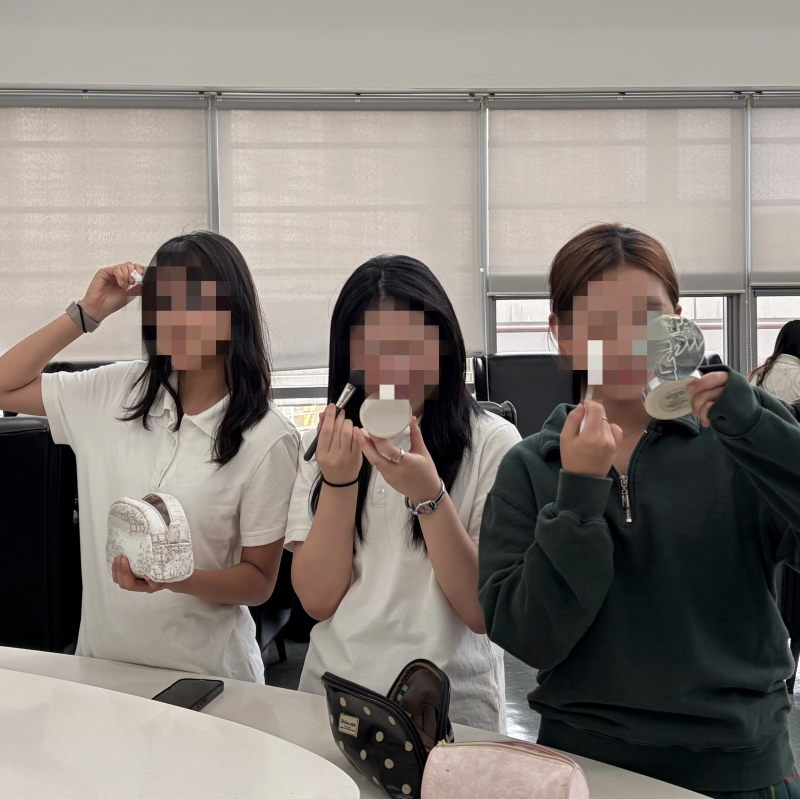
As students become increasingly dissatisfied with their appearance, many start to wear makeup to conceal and remove what they perceive as flaws. While makeup can be useful if it helps build confidence and encourage a positive self-image, in reality it often brings more drawbacks. Jieun Kim (15) said, “Feeling uncomfortable going out with my bare face became part of my life, and I barely have confidence in my natural face.” Having a specific concern about her small pupils, she added, “I always wear color contact lenses whenever I go to school or hagwon. On days when I run out of lenses, I hesitate to leave the house.” Thus, students are shown to experience unnecessary emotional strain due to constant worries about how others might view them.
Adults often ask, “Why do you wear makeup from such a young age?” However, appearance is considerably becoming a top priority among middle and high school students. Makeup provides clear advantages for teenagers. It boosts confidence and satisfaction, and students reported feeling noticeably better about their appearance after wearing it. Once they begin using makeup, the desire to look organized and pretty from the others’eyes often increases, creating a strong psychological effect that might even influence their mood for the day.
On the other hand, its disadvantages are also clear. Heavy reliance on makeup can lead students to dislike their bare faces and become so obsessed that they feel unable to go outside without wearing it. Furthermore, makeup can make the skin more sensitive and cause irritation which leads to a bad cycle in which makeup use leads to more skin concerns. According to interviews, students who previously had few negativity about their faces replied feeling more bothered by minor flaws after starting makeup, showing a noticeable shift in mindset; thinking, “I need to be prettier,” compared to before.
“Why am I so obsessed with makeup? To be honest…”
Then, what would be the reason for the students to continue to be obsessed with their appearance? The biggest reason is that they want to get along well with people of a similar age. Teenagers most frequently talk about topics such as appearance and faces in their daily conversations or small talk. They recommend cosmetic products or share advice about how they could improve or revise their current makeup style to look even better while talking about cosmetics and makeup techniques. In addition to this, as beauty-related content on SNS gains popularity, people become easily exposed to information or images related to appearance.
The bigger problem is that teenagers often evaluate a particular celebrity or idol’s appearance uploaded on social media platforms. They also judge and point out how pretty or handsome or chubby others are. This leads to behavior that places too much value on appearance and reinforces lookism among teenagers. In the interview, Hyejin Park (15) said, “I think Korean people have a strong belief in lookism,” adding that she felt this when people’s reactions or attitudes changed depending on how others looked. She also mentioned, “Topics about appearance and beauty with friends do not simply appear depending on the situation, but come up almost every day,” and added, “Since we are students in the middle of puberty and cosmetic and beauty products became more accessible than in the past, we become more obsessed with our looks.”
This tendency becomes apparent when referring to students’ consumption patterns. Purchase of beauty-related products accounted for the most among teenagers’financial spending. Students mainly buy color contact lenses, various cosmetics, and skincare products. Their after-school routes were also fixed by heading to beauty specialty stores such as Olive Young or Olens. Many students noted that in order ot buy expensive products at relatively cheaper prices, they visit the stores during periods like the Olive Young sale and make bulk purchase. In reality, a contrarian consumption phenomenon was found where people purchase excessively due to excitement about sales, and there were days when people purchased even more on days without sales.
Avoid Excessive Obsession with Appearance…Developing inner self-discipline is essential
People’s first impression naturally has a huge impact. However, judding a persons’ value only by looking at outer appearance is not right. We need to make efforts to focus on inner qualities rather than the outside. Caring about appearance with an attitude of self-care and love can be positive action. However, when it becomes excessive and lacks balance, it carries the danger of becoming an irreversible obsession. Instead of spending too much time thinking about appearance, it would remain a more valuable memory to develop passion for academics that can only be pursued purely during school days. Perhaps it is time for us to move beyond our preoccupation with outward appearance and begin to value our genuine selves.
ⓒ이코노미스트(https://economist.co.kr) '내일을 위한 경제뉴스 이코노미스트' 무단 전재 및 재배포 금지









![썰풀이 최강자 ‘다인이공’...정주행 안 하면 후회할 걸 [김지혜의 ★튜브]](https://image.isplus.com/data/isp/image/2026/01/24/isp20260124000086.400.0.jpeg)
![‘중티’ 나는 남자와 ‘팩폭’ 날리는 여자, 시트콤보다 더 시트콤 같은 ‘여단오’ [김지혜의 ★튜브]](https://image.isplus.com/data/isp/image/2026/01/11/isp20260111000031.400.0.jpg)



당신이 좋아할 만한 기사
브랜드 미디어
브랜드 미디어
검찰, '대장동 닮은꼴' 위례사건 항소 포기…"인용 가능성 고려"
세상을 올바르게,세상을 따뜻하게이데일리
이데일리
이데일리
하정우♥차정원 열애 인정…배우 커플→부부 되나 [종합]
대한민국 스포츠·연예의 살아있는 역사 일간스포츠일간스포츠
일간스포츠
일간스포츠
李 "온기 퍼졌으면"…재계 300조 지방투자 통 큰 화답
세상을 올바르게,세상을 따뜻하게이데일리
이데일리
이데일리
IPO 삼수생 케이뱅크…흥행 기대 속 ‘구주매출 부담’
성공 투자의 동반자마켓인
마켓인
마켓인
이의일 엑셀세라퓨틱스 대표 “대만 매출 두자릿수 이상 성장...화학조성배지로 패러다임 전환”
바이오 성공 투자, 1%를 위한 길라잡이팜이데일리
팜이데일리
팜이데일리